Lesson Overview
Grade Level/Audience: This lesson plan is intended for young adults and adult learners who have an interest in early, ancient civilizations.
Subject: This lesson plan focuses on exploring early civilizations using a variety of technology tools.
Time Frame: This lesson should take no longer than thirty to forty-five minutes and should be conducted over multiple days to complete the course projects.
Content Standards:
The following content standards were used to create this lesson plan for K-12 Education from the North Carolina Public School’s official content standards for learning World History.
http://www.dpi.state.nc.us/curriculum/worldlanguages/scos/


Technology Standards:
- ISTE 2: Digital Citizen – Students recognize the rights, responsibilities and opportunities of living, learning and working in an interconnected digital world, and they act and model in ways that are safe, legal and ethical.
- ISTE 5: Students develop and employ strategies for understanding and solving problems in ways that leverage the power of technological methods to develop and test solutions.
- ISTE 7: Global Collaborator – Students use digital tools to broaden their perspectives and enrich their learning by collaborating with others and working effectively in teams locally and globally.
Objectives:
- Given the Warm Up and Research Activities, the learners will be able to formulate data from a variety of resources.
- Given Project 1 the learner will be able to use chronological thinking to identify the structure of a historical narrative.
- Given Project 2 the learner will be able to formulate historical questions.
Description of Technologies Used:
- Static Technologies: (Free)
- Lucid Chart – online diagramming tool that can be used with Google Chrome or Firefox
- http://www.lucidchart.com
- Online Collaboration Tool: (Free)
- Kahoot! – online quiz making software that can be used on a web browser or on a mobile phone
- http://www.kahoot.com or http://www.kahoot.it
- Mobile App: (Free)
- World History offline – an app that has chronological events by time period.
- https://www.google.com/url?sa=t&rct=j&q=&esrc=s&source=web&cd=1&cad=rja&uact=8&ved=2ahUKEwiyubTV29neAhUMZawKHc01Dk8QFjAAegQICBAB&url=https%3A%2F%2Fplay.google.com%2Fstore%2Fapps%2Fdetails%3Fid%3Dcom.vd.worldhistory%26hl%3Den_US&usg=AOvVaw0n_cfIFF7vUtm7kMBiNahY
Support Materials and Resources:
- Laptop with internet access (ability to access a web browser- preferably Google Chrome)
- Smart phone or tablet with internet access and texting capability
Lesson Description
This lesson can be done individually or as a class, however, this lesson plan is written in the format that the lesson would be completed in an in-person classroom environment. If this lesson is being completed online have class discussions be completed in discussion boards and all group activities be posted in a separate discussion board by one group member. All class video activities will have to be done individually and responses recorded in a discussion board among students.
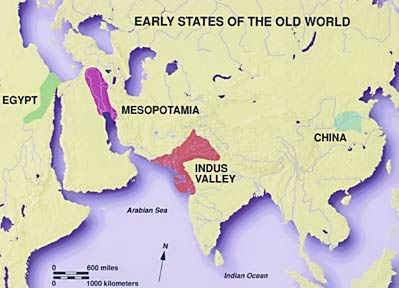
This lesson is to explore the early civilizations through technology: Early Egypt (Nile River Valley), Mesopotamia(Tigris/Euphrates River Valley), Early China(Yellow/Yangtze River Valley), and Early India (Indus River Valley).
Grading: 5 points. 1 participation point, 4 requirement points for each activity
Students will be graded by both participation and meeting each mini project requirement. The participation point will be given if each assignment is completed and turned in on time. Half point can be taken off for each day late.
Warm Up Activity: (Objective 1) Day 1
Students will begin by watching the four Crash Course History videos on the 4 civilizations in class. They will take notes on important points during each of the videos. Notes should at a minimum answer the four following requirements:
- What was the civilization name?
- Where was it located?
- What river(s) contributed to the civilization’s success?
- What is a fun fact about the civilization?
Students will have 1 class day to complete this activity.
Grading: (5 points)
- Students will receive 1 point each for participation in the activity.
- Students will receive 1 point for showing that they wrote down notes for each of the 4 civilizations. Notes will be returned to the students for later reference.
Research Activity: (Objective 1) Day 2
This activity is to practice research and synthesis skills. Studens will spend day 2 researching using the following methods:
- Khan Academy Articles
- Google Scholar
- History Channel
- Ancient Civ – USHistory.Org
- World History Offline App
- Students will download the app to their phone, tablet, or computer and can use this as part of how they research events in different time periods.
Students should take notes and bookmark pages to save for later to use for the next activity. They will have 1 class day for this activity.
Grading: None
This is a participation activity aimed to prepare students for subsequent activities.
Project 1 – Lucid Chart Time line (Objective 2): Day 3, 4

- Students will make a timeline with at least 10 important events that impacted the civilizations over time using Lucid chart which is a free extension to Google Chrome with enhanced diagramming tools.
- https://www.lucidchart.com/
- Students will have 2 class days to work on these timelines.
Grading: (5 points for each time line – 4 time lines total)
- Students will receive 1 point each for participation in the activity.
- 1 point for having 10 events in the timeline
- 1 point for having a picture to represent each event
- 1 point for using different colors and shapes
- 1 point for having titles and dates for each event
Project 2 – Kahoot! Quiz (Objective 3): Day 5, 6
- Part 1: Students will make a quiz based on their time lines for each civilization using Kahoot! that will be presented during subsequent classes. (4 quizzes total will be created per student) this should take 1 class day. There should be 5 questions in each quiz. This is to be completed on day 1.
- Part 2: Students will be randomly selected to present one of their quizzes to the class. The class will take the quiz while the quiz creator reads the questions out loud to the class. (Added public speaking practice!) This is to be completed on day 2.
Grading: (5 points each – part 1 and 2)
- Part 1: Students will receive 1 point each for participation in the activity.
- Part 1: Students will receive 1 point for the successful creation of each quiz.
- Part 2: Students will receive 1 bonus point for participation in the activity: presenting their quiz to the class.
Supplementary Resources:
- List of additional learning tools
 One Day Education